
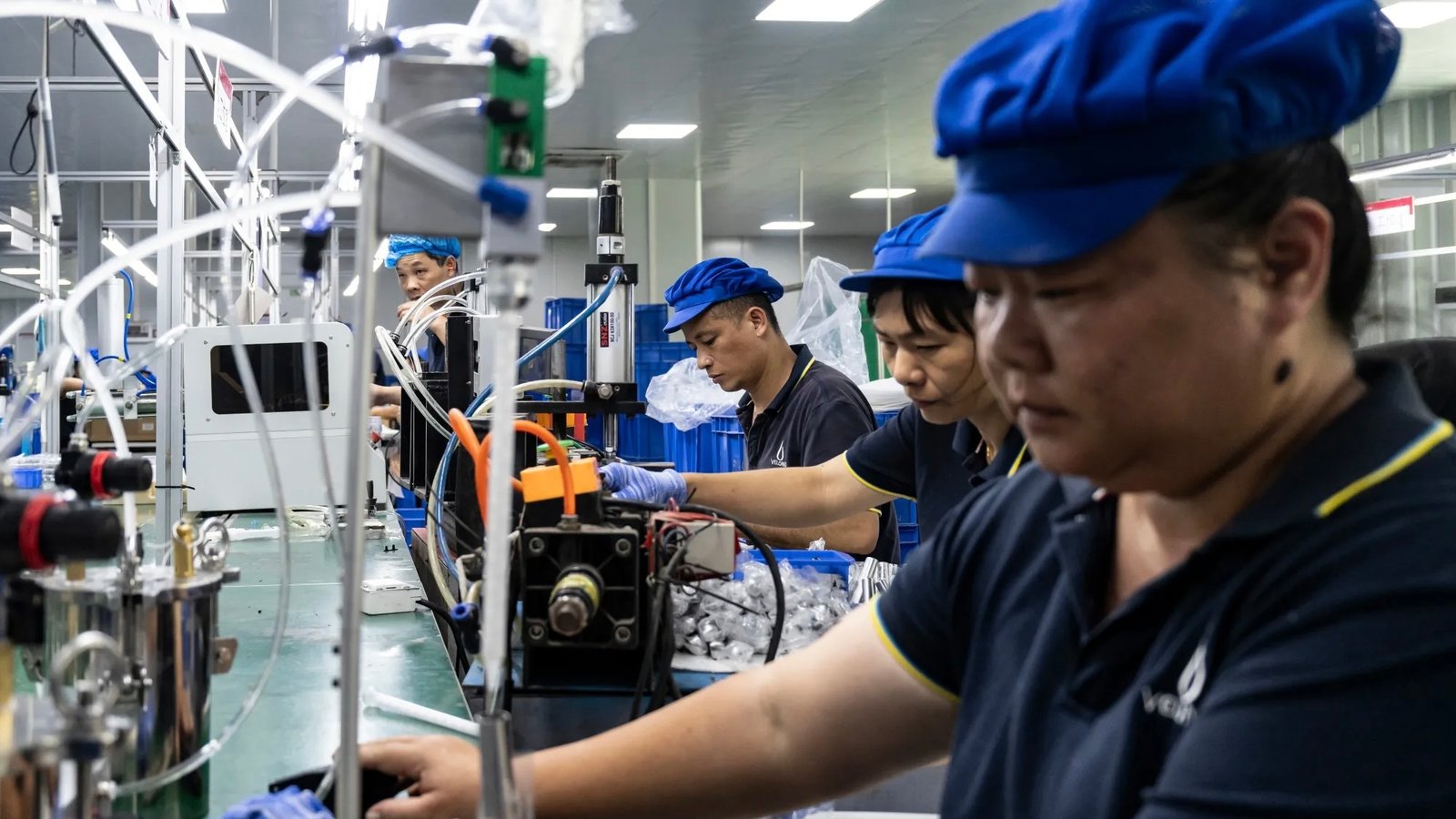
China’s economic recovery faced a new setback in July as factory activity unexpectedly contracted for the first time in five months, raising fresh concerns about the strength of growth in the world’s second-largest economy.
Data released by the National Bureau of Statistics (NBS) showed that China’s official Manufacturing Purchasing Managers’ Index (PMI) fell to 49.2 in July, dropping below the key 50-point threshold that separates expansion from contraction. The figure came in below economists’ expectations, with analysts surveyed by Bloomberg forecasting a reading of 50.1.
The decline reflects growing pressure on Chinese manufacturers, who are dealing with weaker demand, fewer new orders, and persistent uncertainty in both domestic and international markets.
Construction Sector Hits New Low
The slowdown was not limited to factories. China’s services and construction sectors also showed signs of weakness, with the official non-manufacturing PMI falling to 49.0, its lowest level since December 2022.
The construction sector was among the hardest hit, with its PMI dropping to 47.0, signaling a continued crisis in China’s property market. The real estate sector, once a major driver of economic growth, has struggled for several years following a wave of debt problems among major developers and declining consumer confidence.
Consumer Caution Weighs on Growth
Economists say one of China’s biggest challenges remains weak domestic demand. Many households have become more cautious about spending, while businesses are delaying investment decisions amid economic uncertainty.
The decline in new orders reported by manufacturers suggests that companies may continue facing pressure in the months ahead unless consumer confidence improves.
Export Strength Faces New Challenges
For much of the recent period, China relied on strong exports to support economic activity despite domestic weakness. However, global trade tensions, changing supply chains, and slower demand in some overseas markets are making that strategy increasingly difficult.
Analysts argue that China’s long-term growth will depend more heavily on stimulating domestic consumption rather than relying mainly on exports and industrial production.
Pressure Mounts on Beijing
The latest figures increase pressure on Chinese policymakers to take stronger action. While authorities have introduced targeted measures to support growth, investors are watching closely to see whether Beijing will announce broader economic support programs.
The challenge for China’s leadership is balancing short-term economic recovery efforts with long-term goals of reducing financial risks, particularly in the property sector.
Global Implications
A prolonged slowdown in China would have consequences far beyond its borders. As the world’s largest manufacturing center and a major consumer of commodities, China’s economic performance affects global trade, energy markets, and supply chains.
Countries that depend heavily on exports to China could face weaker demand, while global companies may need to adjust their strategies if Chinese growth continues to lose momentum.
The July figures serve as another reminder that, despite its economic size and industrial power, China is facing significant challenges as it seeks to restore stronger and more balanced growth.
Roche magazine